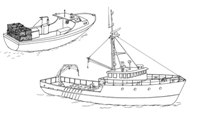



These vessels use surrounding and seine nets and comprise a large group appearing in all sizes, ranging from open boats, usually at least 10 m in length, to ocean going vessels. http://www.fao.org/fishery/vesseltype/700/en
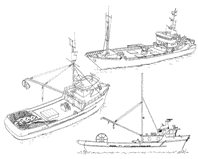
A purse seine is made of a long wall of netting framed with a lead line of equal or longer length than the float line.
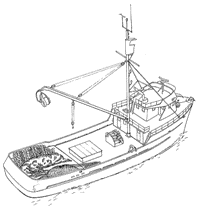
American seiners are most common on both coasts of North America and in many areas of Oceana and like all purse seiners are a most effective vessels for catching aggregating species near the surface.
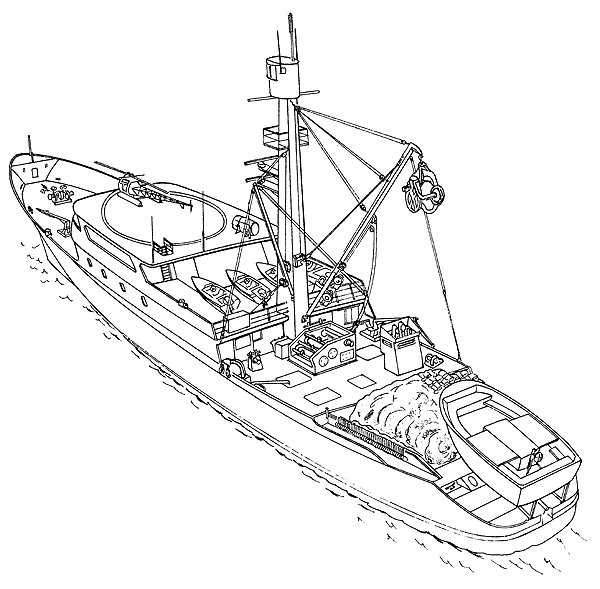
These vessels are large purse seiners with the same general arrangement as the American seiner, equipped to handle large and heavy purse seines for tuna .
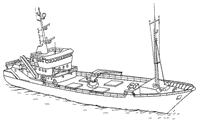
European seiners are most common in Scandinavia, the North Sea, Baltic and all waters fished by European nations and like all purse seiners are a most effective vessels for catching aggregating species near the surface.
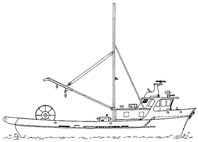
Drum seining was developed mainly for small vessels fishing for salmon in river estuaries, bays and creeks on the coast of British Columbia and Alaska.
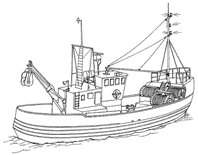
These vessels will assume characteristics dependent on where they are used.
Towing one or more nets classified as trawls. http://www.fao.org/fishery/vesseltype/10/en
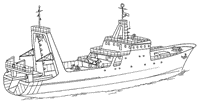
Freezer trawlers are outfitted with refrigerating plant and freezing equipment
In the wet-fish trawler the fish is kept in the hold in the fresh/"wet" condition.
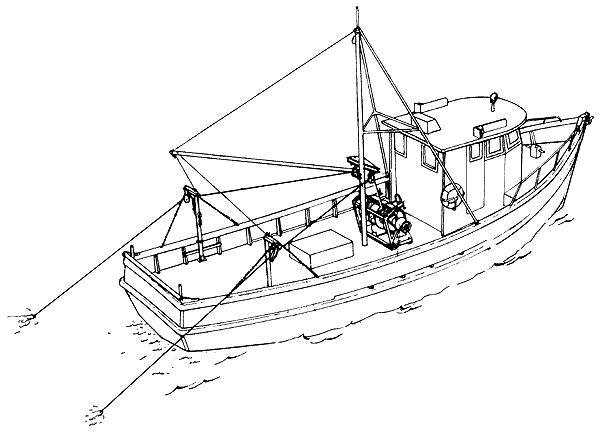
These trawlers use strong outrigger booms to tow their fishing gear.
Otter trawlers tow one or several parallel trawls that are kept horizontally open with the aid of otter boards.
These vessels use a dredge for collecting molluscs from the bottom. The vessel drags the gear over the seabed digging the shellfish from the ground. http://www.fao.org/fishery/vesseltype/440 
The size of the vessels varies from open boats up to large specialised drifters, operating on the high sea. http://www.fao.org/fishery/vesseltype/200 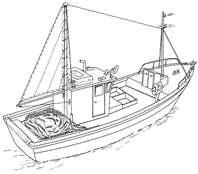
Fishing vessel equipped to operate liftnets, which are held from the ship's side and raised and lowered by means of outriggers http://www.fao.org/fishery/vesseltype/480 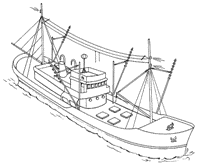
In general two types of jigger vessels are engaged in fisheries.
On these vessels, used primary for catching of tuna and skipjack, the fishermen stand at the railing or on special platforms and fish with poles and lines.
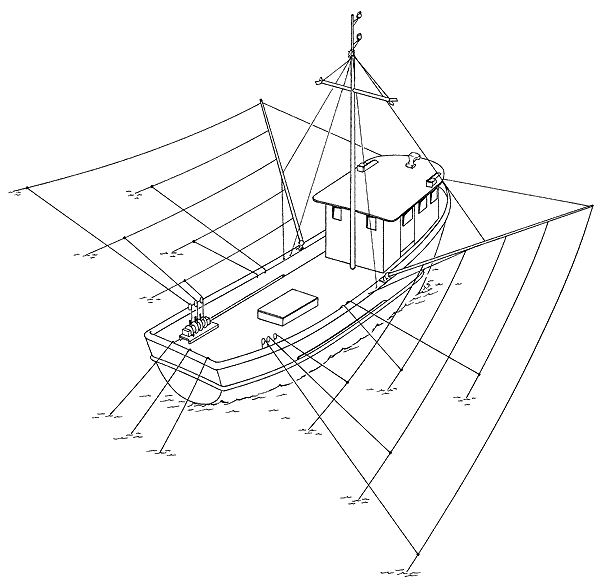
Trollers range from small open boats and canoes up to large refrigerated vessels of 25 or 30 meters length.
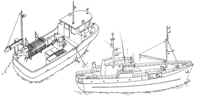
Hand operated longlining can be carried out with boats and vessels of every size. Number of hooks and lines handled depends on the size of vessel, the degree of mechanisation and the size of the crew. Almost any vessel can function as a longliner to some degree; however, there are large purpose built longliners which engage in single species fisheries such as those for tuna .
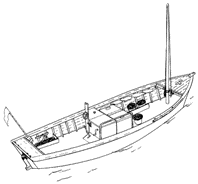
Normally undecked vessels comprising canoes and other small or medium sized vessels without any special features for gear handling.
These vessels are used for setting pots or traps for catching fish, lobsters, crabs, crayfish and other similar species. http://www.fao.org/fishery/vesseltype/230